

Talwar says AI will reshape work, cities & medicine
Wed, 14th Oct 2026 (Today)
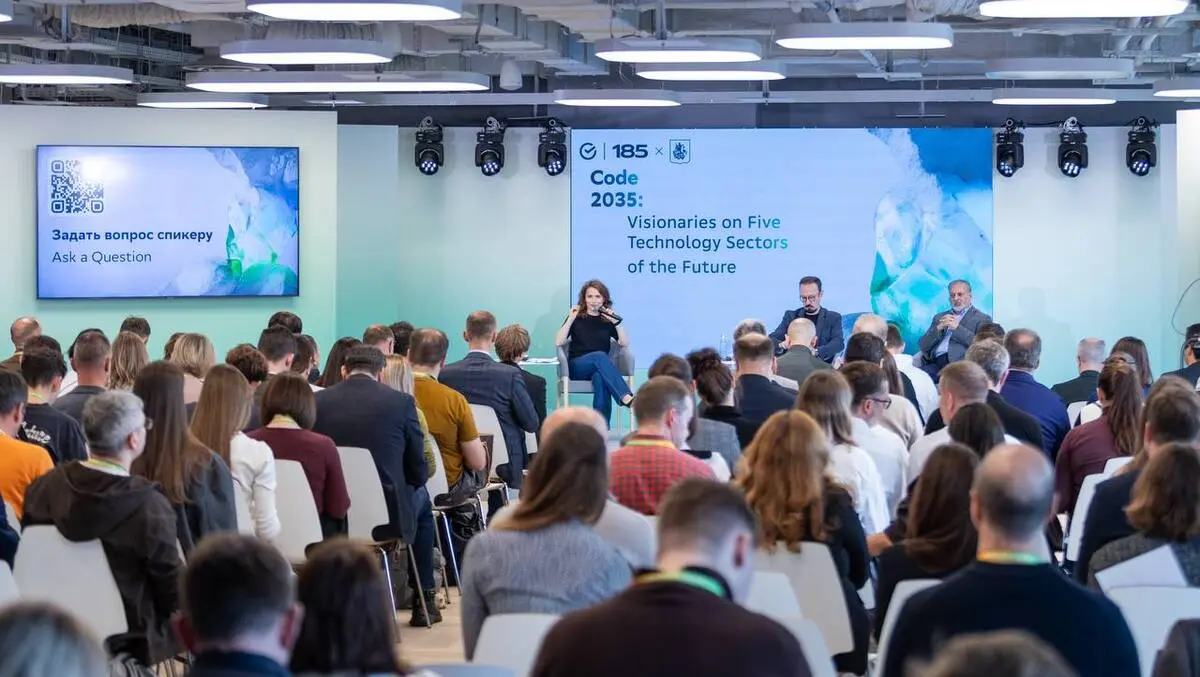
Futurist Rohit Talwar outlined his forecasts for how artificial intelligence will reshape business, robotics, medicine, education and space over the coming decade at the Moscow Startup Summit.
Talwar, Chief Executive Officer of Fast Future, focused much of his remarks on the changing role of people as AI systems move from assisting with routine tasks to taking on more decision-making functions. He said the pace of adoption would vary among individual workers, small businesses and large companies.
In business, he argued that personal productivity tools will spread quickly, while smaller companies and creative industries are likely to change faster than large corporations. Bigger organisations, he said, will move more slowly because of security concerns, risk management and questions over accountability.
"Business leaders are not opposed to employees using AI for reports and data analysis," Talwar said. "But when it comes to automating entire workflows and decision-making by agents, two concerns arise: who is responsible if something goes wrong, and why are you needed if AI makes the decision?"
Robots at work
On robotics, Talwar pointed to industrial uses rather than consumer novelty. He identified fine-control robots for manufacturing, warehousing and logistics, machines for construction and maintenance, and drones for inspection work in buildings, agriculture and dangerous environments.
"Of course, robots for entertainment, gymnastics, or running are also developing. But the real shift will happen precisely where robots take on real work and become truly intelligent," he said.
He also highlighted China's approach to combining AI and robotics with labour policy. In his account, the country is trying to avoid large-scale worker displacement while supporting the creation of very small businesses.
"China is obsessed with ensuring that people do not remain without work. Hence the support for creating one-person companies," Talwar said.
He added that China could offer humanoid robots at very low prices, putting the cost at USD $1,000 or less. If achieved, such pricing would sharply expand access to general-purpose machines for households and smaller firms.
Farms and clinics
In agriculture and food production, Talwar described a nearer-term shift to data-driven farming. Farms, he said, will increasingly use drones, sensors and AI analysis of operational data and weather forecasts to guide planting and other decisions.
Over a longer period, the sector could move towards autonomous farms, wider use of vertical farming and genetically enhanced crops. He also pointed to bioengineered products as part of the same broad shift in food technology.
In medicine, Talwar said AI is already reducing the time needed for drug development. He told the audience that the next stages would involve greater use of robotics and machine vision in surgery, followed later by autonomous surgery and treatments tailored more closely to each patient's physiology.
AI in schools
Education was another area where Talwar predicted substantial change. He said AI could give each student a personal tutor able to adapt explanations to individual needs and provide a level of attention that classroom teachers often cannot offer when responsible for large groups.
He also said AI could help teachers with lesson planning, alternative teaching methods and progress monitoring through school data. Alongside that, he suggested educational facilities could be used far more intensively for adult learning.
"Most schools, universities, and colleges use their facilities less than a third of the time. Why can't we use these opportunities for continuous adult learning?" Talwar said.
Talwar also proposed a funding model in which students would study without upfront fees and later contribute a share of lifetime income. "We are effectively securitizing education. Imagine each class: if one person becomes a millionaire, that is a huge return, and a large part of the money goes to educating the next generation," he said.
Cities and space
Looking at urban development, Talwar linked AI to modular construction, energy efficiency and automated infrastructure management. He referred to three-bedroom houses in China being printed for about 100,000 rubles and outlined a future that includes waste-to-energy systems, motion-sensitive flooring, self-managing homes, automatic traffic rerouting, solar roads and self-healing concrete.
He said maintenance robots and drones could also speed up responses to accidents and reduce disruption in cities. The same logic of automation, he suggested, would extend from buildings to roads and public facilities.
Space was the most speculative part of his outlook. Talwar mentioned ideas including space elevators, large mirrors designed to reflect solar radiation and orbital settlements used in part for food production experiments.
"It is interesting what new materials, food products, and treatments humans could create in weightlessness that cannot be made or even simulated on Earth?" he said.
Talwar ended by describing three broad stages of AI development: current systems that generate text and images; a later stage in which AI performs all human tasks in parallel while improving continuously; and a third stage of artificial superintelligence.
"Superintelligence may create new areas of the economy and, I hope, solve some of our biggest problems," he said.